Retrofit insulation in Mount Pleasant SC - a lived-in home that stays comfortable
A hot room upstairs, drafty floors or a thin attic? We seal the leaks and add insulation so your house holds the temperature you set.
- Fully licensed and insured.
- Free quotes on site.
- We reply within 1 business day.
Can you add insulation to a house you already live in?
Yes. Retrofit insulation in Mount Pleasant means adding insulation to the attic, walls, floors or crawl space of an existing home and sealing the air leaks around it, so you spend less to heat and cool the house you already have.
We're E&F Mount Pleasant Spray Foam Insulation, based in Mount Pleasant and working in Charleston, North Charleston, Summerville and the cities around them. Most of the calls I get start with one room that never feels right, or an attic nobody has checked in years. The price and the schedule turn on the same few things: how much insulation is already up there and what shape it's in, whether old material has to come out first, whether the walls need filling, and whether an older house needs its wiring looked at before we begin. At the estimate I'll explain what I found and what I'd suggest, so you can see where your own house lands.
How do you know your house needs more insulation?
A room that stays hot
If the room over the garage or the upstairs bedrooms stay warm long after the rest of the house has cooled, the insulation there is usually thin, settled or missing, or air is slipping in around it. Left alone, the air conditioner runs longer to catch up, and you see it on the power bill every summer.
Drafts and cold floors
A draft at outlets and baseboards, or floors that feel cold in winter, usually points to open gaps in the walls or a bare floor over the crawl space. It won't get worse overnight, but until it's fixed you keep paying to heat air that goes straight back outside.
Flat, dirty attic insulation
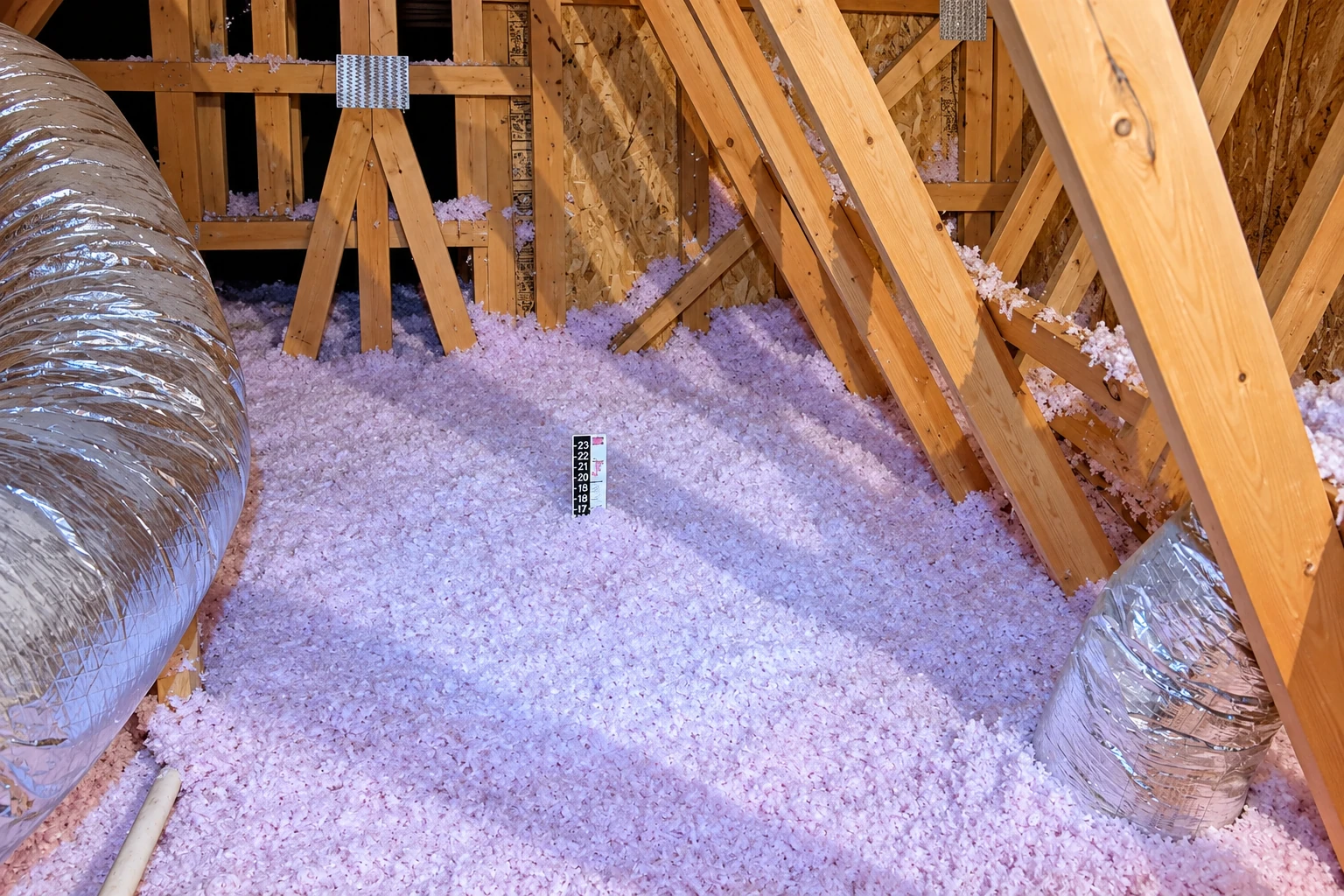
When you look through the hatch and see insulation that's packed down, stained or full of droppings, it has stopped doing much of its job. Laying new material over it keeps the problem in place, and the longer it sits, the more likely the old layer has to come out first.
How we do retrofit insulation in a lived-in home
Insulating a house people already live in means working around what's there, so before I suggest a plan I check the build year, the wiring and the type of crawl space you have. Then we work in an order that lets the insulation pay off. We take out anything soaked or dirty, seal the gaps around can lights, pipes and the attic hatch so the new material isn't fighting a draft, and keep the eave vents clear so the attic can still breathe. After that we add blown-in insulation, which is loose fill blown through a hose, evenly out to the edges rather than piling it in the middle. For walls we often fill the cavities through small holes, which keeps the mess down, and under the house we insulate the floor or the crawl space depending on how it's built.
Some houses need a different approach in the attic. When the ductwork runs up there, spray foam insulation under the roof deck can be worth the extra cost, because it seals air while it insulates and brings the ducts inside the sealed space. If the walls and floors are fine and only the upstairs suffers, our attic insulation work handles that on its own.
Air sealing and a loose-fill top-up
This suits most attics where the ducts sit below the ceiling, because sealing the gaps and adding blown-in fill does most of the work for less money. It's what I usually recommend unless something in the attic tells me otherwise.
Spray foam under the roof deck
This suits a house whose ductwork lives in the attic, since foam costs more but seals and insulates in one step and keeps those ducts out of the attic heat. I talk through the humidity side of it with you before we choose it.
Request a retrofit estimate: attic, walls and crawl space
We reply within one business day to set up a visit. I come out myself, look over the spaces you'd like insulated and give you a free estimate on site, with no obligation. If you'd like to go ahead, we take it from there and keep you informed.
(843) 416-5007What changes retrofit insulation work in Mount Pleasant
Permits here come from the building inspection office of the Town of Mount Pleasant, which permits work valued over an amount its building official sets or work that needs a structural inspection. Its list names buildings and systems, not insulation, so whether your job needs a permit isn't settled until someone asks. Before we start, we check with the building office for your address, and if a permit is needed we take care of the application, keep you informed and expect the office's field inspectors to check the work against the building code along the way.
Mount Pleasant floods from drainage that's blocked or can't keep up, and from storm surge, which can bring wave forces into the coastal V and VE flood zones. That changes what we do under the house, because national guidance says a vented crawl space can be retrofitted to resist flood damage while a sealed, conditioned one isn't meant for flood-prone areas, and with a vented crawl space the insulation goes in the floor above it. We see the same low ground on jobs in James Island and Charleston, so I ask about flood risk early and look at the crawl space before anyone talks about closing it up.
What happens after you call us about retrofit insulation?
Call or send the form
Call us at (843) 416-5007 or fill in the form on this page, and we'll get back to you to set up a visit. It helps to tell us which rooms bother you most, so I know where to start.
I look the house over
I come out myself, go through the attic, crawl space or walls, and ask a few questions about the house. Your estimate explains what I found, what I'd suggest and why, so you know what the work involves and what it costs before you decide anything.
We insulate and walk through
If you'd like to go ahead, we check with the building office for your address, then cover floors and furniture while our install crew works. When they're done, I walk you through the finished job and explain what we did before we leave.
Frequently asked questions
How much does retrofit insulation cost in Mount Pleasant, SC?
Attic insulation in the Charleston area usually costs about $1,400 to $4,500 per job, and that range covers the attic alone, so wall or crawl space work is priced on top. Where your house falls depends mostly on what's already up there and whether it has to come out first. Your own figure comes from the estimate after I've looked at the house.
Can my walls be insulated without opening them up?
Usually, yes. The common way is drill and fill, where blown-in insulation goes through small holes near the top of each wall cavity, working from inside the house or outside. It's worth asking which side, because filling from outside cuts through the layer behind the siding that sheds water, and that layer then has to be patched or replaced.
Is a sealed attic a good idea for a humid house?
It can be, but it isn't automatic. Research from 2011 to 2013 suggests a sealed attic in a hot, humid climate could leave the house more humid than a vented one, while other research shows cold air conditioning ducts in a vented attic can drip condensation in summer and leave the attic floor open to mold and rot. That's why the duct layout decides it for me, and I'll talk through what I see in your attic before we choose.
What is the best way to insulate an older house?
Start with a wiring and build-year check before any insulation goes in. The National Electrical Code doesn't allow insulation on or around old knob-and-tube wiring, and in homes built before 1980, lead safety rules may apply depending on how much wall work is done. Once we know what's in the walls and attic, choosing between a top-up, foam or wall filling comes with fewer surprises.
Do we have to leave the house while you insulate?
For most attic top-ups and loose-fill wall work, you can usually stay home, though we'll ask you to keep children and pets away from where we're working. Spray foam is different, because everyone, pets included, stays out until the foam maker's re-entry time has passed. I'll give you that time before the day we spray, so you can plan around it.
What causes the room over the garage to stay so hot?
Usually it's thin or missing insulation in that room's floor and in its knee walls, the short attic walls beside it, plus air leaking in from the garage and the attic around it. A room like that has hot air on several sides, so it can lag even when the rest of the house is well insulated. I look at the floor, the knee walls and the gaps around them during the estimate.
Mt Pleasant, SC
Book your retrofit insulation estimate visit
Have your home's build year, crawl space type and any flood zone handy when you call, because those three shape the plan before I even climb into the attic.