Home insulation in Mount Pleasant SC - even comfort from attic to floor
Hot rooms upstairs, drafty floors or a climbing power bill usually trace back to air leaks and thin insulation, which we seal and top up.
- Fully licensed and insured.
- Free quotes on site.
- We reply within 1 business day.
What does insulating a whole house in Mount Pleasant involve?
Home insulation in Mount Pleasant, SC means sealing the air leaks in your house and adding insulation to the attic, walls, floors or crawl space, so heat stays outside in summer and inside in winter. The two work best together, which is why we look at the whole house before suggesting anything.
Most people call me about one room, usually the hot one upstairs or the room over the garage, and the cause often sits somewhere else, in gaps that attic air sealing closes. The price moves with how many spaces need work, whether old insulation has to come out first, how much sealing the house needs and whether you choose foam or loose fill. The schedule turns on those same things, plus how easy the attic and crawl space are to reach. At the estimate I'll tell you what I found and what I'd suggest, so you have a figure for your own house instead of a guess.
How can you tell your house needs more insulation?
One room always runs hot
If the upstairs or the room over the garage stays hot while the rest of the house feels fine, the insulation above it is usually thin, or attic air is leaking down into the room. Left alone, your system runs longer every summer trying to keep up with that one room.
Cold floors and drafts
Floors that feel cold in winter, or a draft you can feel near outlets and baseboards, usually point to an uninsulated floor over the crawl space or open gaps in the walls. Waiting means another season of a power bill that pays to heat the space under your house.
Old insulation looks wrong
If the attic insulation is flattened, stained, damp or full of droppings, it isn't doing much, and covering it with new material only keeps the problem up there. The longer wet insulation sits, the more the framing and ceiling under it take on moisture.
How we approach home insulation, from attic to crawl space
I start by walking the whole house with you, from the attic to the floors and the crawl space, because the room that feels worst isn't always where the heat gets in. Before we add anything, I look for trouble that changes the plan, such as old wiring, signs of water or fuel-burning appliances that need their air. On the job, our crew seals the gaps around can lights, pipes, wires and the attic hatch first, so the new insulation isn't fighting a draft, and keeps the eave vents clear so a vented attic can still breathe. We lay the insulation full depth right out to the edges, since that's where it's most often thin. Where there's a real choice, like a sealed or vented attic, I lay out the tradeoffs and let you decide.
Some houses need other work before or alongside the insulation. If what's up there now is soaked or full of droppings, insulation removal comes first, because new material laid over it only buries the problem. Under the floor, crawl space insulation takes some thought in a humid place like ours. Energy models have shown lower heating and cooling loads when a crawl space's venting is cut way back or its walls are insulated instead of the floor, but cutting that venting needs extra care where summers are warm and damp, so I look at how yours handles moisture before suggesting either.
Vented attic, sealed and topped up
This suits most houses whose ductwork isn't in the attic, because sealing the gaps and adding blown-in insulation, loose fill blown through a hose, costs less than foam and does the job well. We seal the ceiling, keep the eave vents open and add fresh fill over the old wherever the old is still dry and clean.
Sealed attic with spray foam
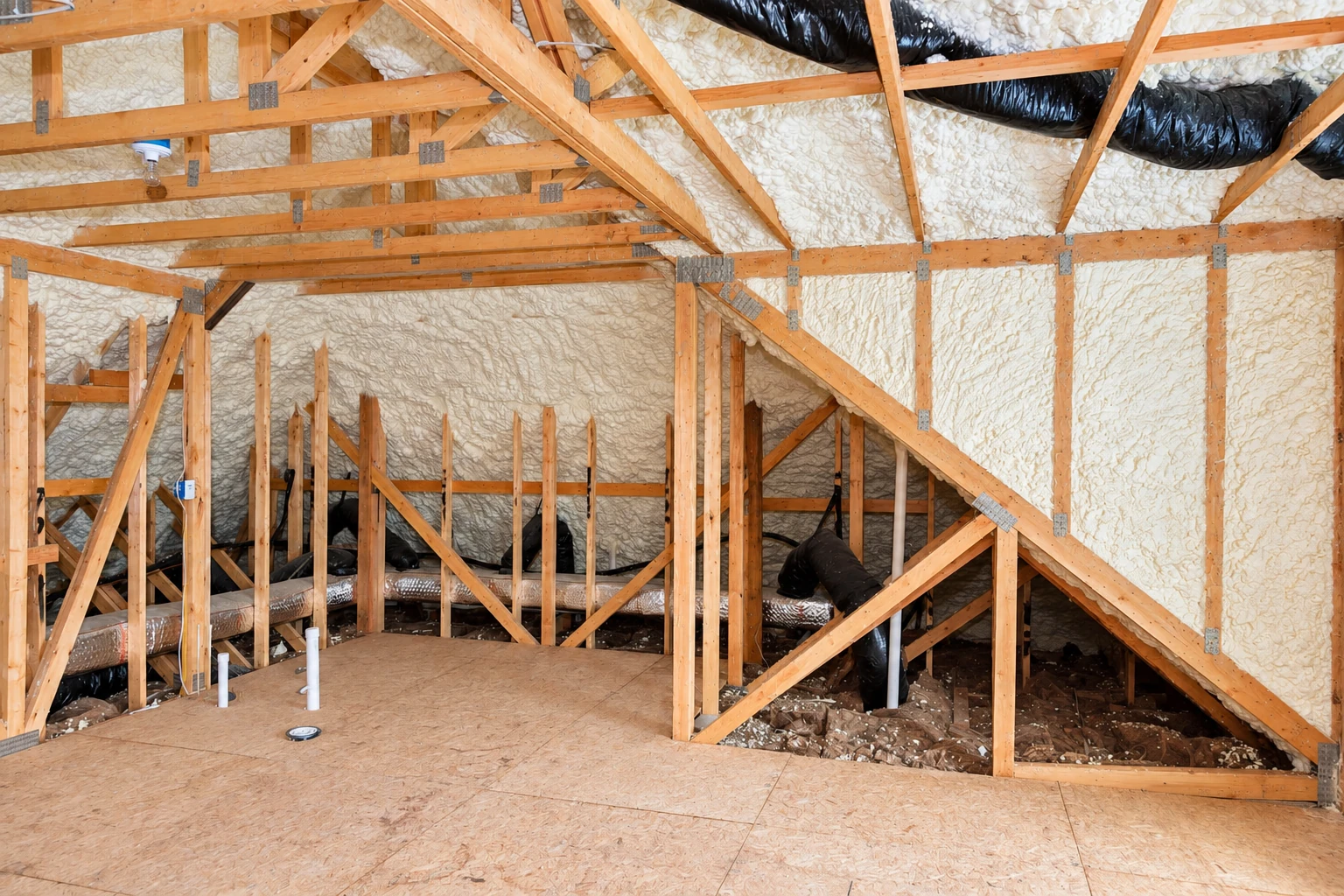
This suits houses where the ducts and air handler live in the attic, because foam on the underside of the roof deck brings them inside the house, and the ceiling below is left without insulation. It costs more and seals air while it insulates, and in our summers it needs a moisture plan, which I'll go over with you.
Get your whole-house insulation estimate, from attic to crawl space
We reply within one business day to set up a visit. I come out myself, look over the attic, walls, floors and crawl space, and give you a free estimate on site with no obligation. If you can, tell us what kind of attic you have and whether the house is elevated or sits over a crawl space.
(843) 416-5007Home insulation for elevated and crawl space houses in Mount Pleasant
Many houses here are elevated or sit over a crawl space, and Mount Pleasant's flood rules shape what we can do underneath them. Those rules cover new or substantially improved elevated and crawl space buildings, and they say any fully enclosed area below the design flood elevation, the flood height the town designs buildings around, has to let floodwater flow in and out and can't be finished living space. Under an elevated house, that enclosed space also can't be heated or cooled. So in a house these rules cover, we don't close in or condition the space below, and the insulation goes in the floor above instead.
We're based in Mount Pleasant and work in the cities around it, and we see the same humid summers, older lived-in houses and damp crawl spaces on jobs in Charleston and on James Island. Most of what we find up top is thin attic insulation, open gaps and old material that has been there for decades.
What happens after you call us about insulating your house?
Call or send us a note
Call (843) 416-5007 or use the form, and we'll set a visit at a time that suits you. A line about what's bothering you, like a hot room or a drafty floor, helps me know where to look first.
I look over the house
I come out myself, go up into the attic and under the floor, and ask a few questions about how the house feels through the year. You get what I found, what I'd suggest and what it costs, so you can weigh it before anything is scheduled.
Our crew does the work
Once you decide, we check with the building office for your address, protect your home, and our install crew does the work. Before we leave, I walk you through what we did and why.
Frequently asked questions
How much does attic insulation cost around Charleston, SC?
Attic insulation in the Charleston area usually costs about $1,400 to $4,500 per job, and that covers the attic alone, so floors, walls or a crawl space would add to it. Where a job lands comes down to the size of the attic, whether old material has to come out first and how much sealing is needed, and foam at the roof deck generally costs more than sealing and topping up loose fill. I'll give you a figure for your own attic at the estimate.
Is a sealed attic a good idea in a humid climate like Mount Pleasant?
It can be, as long as the plan handles summer moisture as well as heat. In hot, humid places, condensation on the roof deck matters less in winter, but in summer damp outdoor air and air leaks can carry moisture into the attic. In one study, an attic sealed with open-cell spray foam sometimes held air close to saturated on late afternoons of warm to hot days. That's why I look at where your ducts run and how tight the house is before we talk about which way to go.
How much can insulating my house save on my power bill?
On average, owners can save up to 20% on heating and cooling, or up to 10% on their total energy costs. Those averages count added insulation and sealed air leaks together, so a plan that does both gets the most out of the work. What you save depends on what's up there now and how leaky the house is.
Do I need a permit to add insulation in Mount Pleasant, SC?
The town issues building permits for projects valued above the amount its Building Official sets or needing a structural inspection, so whether your job needs one comes down to its size and scope. Permits come from the Town of Mount Pleasant's Building Inspections Division, which takes calls at 843-884-5184. Before any work starts, we check with the building office for your address, whether that's the town, another city or the county, and if a permit is needed we take care of the application and keep you informed.
How do I know what R-value my house needs?
Each part of the house has its own recommended level, set by your climate and by where the insulation goes, so the attic, walls and floor can each call for a different R-value, the measure of how well insulation slows heat. A higher number means better performance, and the cost-effective level changes from one space to the next. At the estimate I'll check how many inches you already have and tell you what each space would need.
How long does it take to insulate a house, and do we have to leave?
How long we're there comes down to how many spaces we're insulating and whether old material has to come out first, and I'll tell you what to expect at the estimate. Blown-in work usually lets you stay home. Spray foam has a re-entry time, the wait before people and pets can come back inside, and we'll give you that wait and plan the day around it before we start.
Mt Pleasant, SC
Schedule your home insulation visit
Attics are far easier to work in during the cooler months, so this is a good time to have yours looked at before next summer's heat.