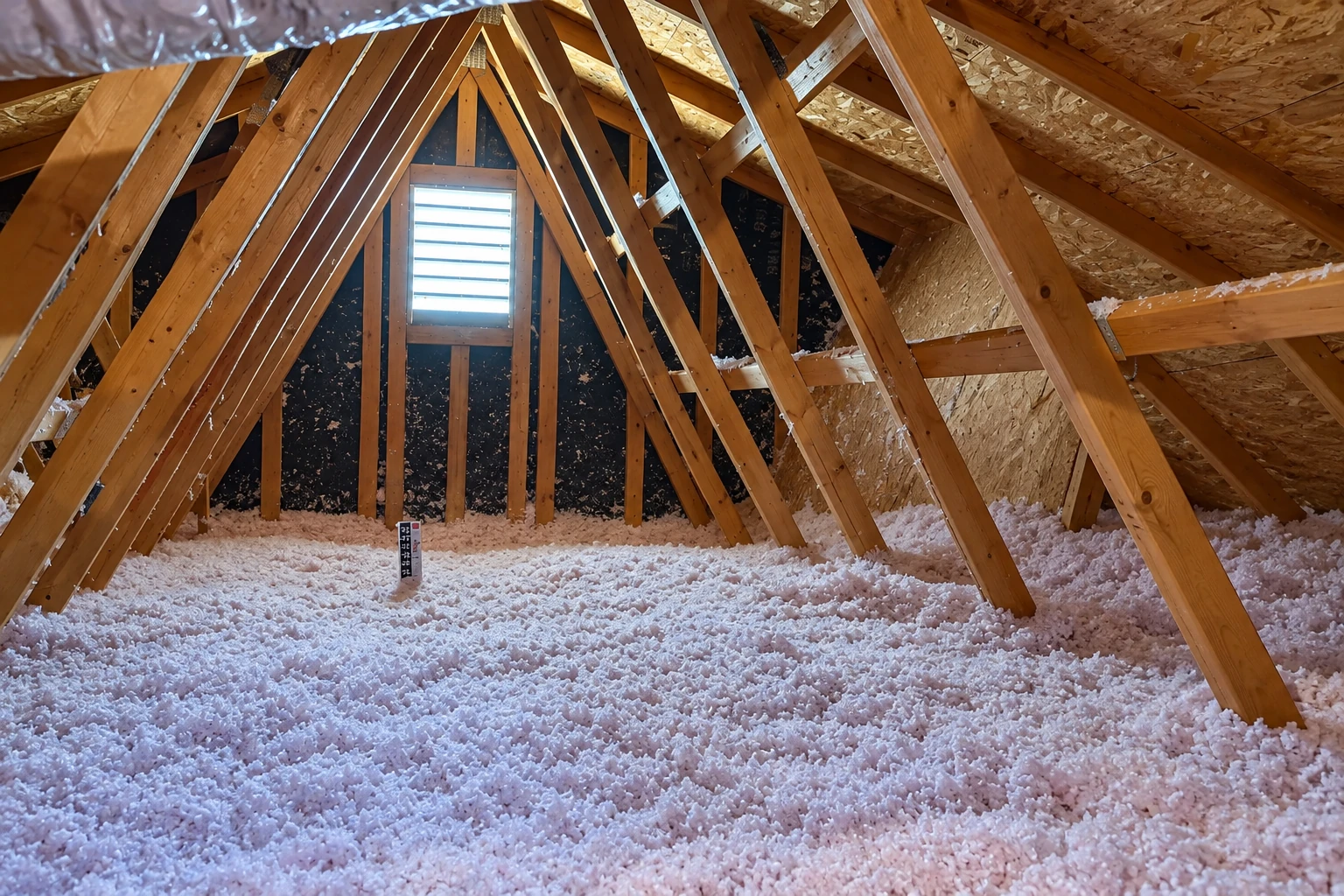
Blown-in insulation in Mount Pleasant SC - an even attic with the vents kept clear
Hot upstairs rooms and a climbing power bill often trace back to a thin attic. We check it first, then blow in an even layer.
- Fully licensed and insured.
- Free quotes on site.
- We reply within 1 business day.
Is my attic ready for blown-in insulation, and how much should I add?
Blown-in insulation is loose fiberglass, rock wool or cellulose blown through a hose across your attic floor after the gaps in the ceiling are sealed, and in a Mount Pleasant house it covers the whole ceiling so heat has a harder time getting into the rooms below.
Most people who call E&F Mount Pleasant Spray Foam Insulation have an upstairs room that won't cool down or a power bill that keeps creeping up, and the attic is usually the first place I look. The price mostly turns on how big the attic is, how many inches are already up there and whether anything has to be fixed or taken out before new fill goes in, while the schedule depends on what that first look turns up. Closing the gaps first with attic air sealing is part of doing this well, because loose fill can't stop a draft on its own. When I come out, I look over the attic, explain what I found and tell you what I'd suggest, so you have your own figure instead of a guess.
How can you tell your attic needs more insulation?
Upstairs rooms stay hot
If the bedrooms upstairs or the room over the garage stay warm long after the sun goes down, the insulation above them is usually thin or uneven. Every summer you wait, the air conditioner works harder to make up the difference.
Joist tops showing through
When you open the hatch and can see the tops of the ceiling joists, the wooden beams the ceiling hangs from, there isn't much insulation left up there. Older loose fill packs down over the years, so a house that was fine when it was built can come up short now.
Stained or matted insulation
Insulation that's flattened, dark in patches or scattered with droppings usually means a leak or animals got in at some point. New fill on top keeps that problem in the attic, so it's worth having it looked at before you add anything.
How we install blown-in insulation
Before we blow anything in, I check the attic for wet insulation, damaged wood, old wiring and light fixtures that need a cover, because those have to be dealt with before they're buried. Then our crew seals the gaps around pipes, wires and the attic hatch, puts covers where fixtures need them and makes sure the vents along the eaves stay open so the attic can still breathe. After that we blow the fill in to an even depth across the whole ceiling, giving the edges the same attention as the middle, since thin corners over the outside walls are where most attics come up short. We clean up the hatch area and the path we used before we leave.
Sometimes the attic needs more than a top-up. If the old layer is soaked or fouled, we take it out first with our insulation removal service, and if the drafts and hot rooms go beyond the attic, our home insulation work looks at the rest of the house.
Sealing plus loose fill
This suits most attics, including ones that already have some insulation, because it closes the drafts and adds depth for less than foam. It's what I recommend unless your ductwork runs through the attic.
Spray foam instead
Foam costs more, but it seals air while it insulates, which matters when your ducts and air handler live up there. In that case I'll talk through both with you before you decide.
Find out what your attic needs, free and on site
We reply to every call and message within one business day to set up a visit. The estimate is free, done at your house, and comes with no obligation to go ahead.
(843) 416-5007Blown-in insulation permits and attics in Mount Pleasant
The Town of Mount Pleasant requires a building permit for construction projects above a value its Building Official sets, or for work that needs a structural inspection. That rule doesn't say on its own whether adding insulation to an attic falls under it, so before we start, we check with the building office for your address, and if a permit is needed, we take care of the application and keep you informed. If you'd like to ask yourself, the Building Inspections Division answers questions at 843-884-5184.
We're based in Mount Pleasant and work in the cities around it, and much of what we see here is lived-in houses whose attics have had insulation added, moved or packed down over the years, often a mix of old batts and loose fill. We find the same patchwork in older homes in Charleston and North Charleston, so I take my time reading what's there before I suggest anything.
What happens after you call about blown-in insulation in Mount Pleasant?
Call or send a message
Call (843) 416-5007 or use the form, and we'll get back to you to set up a visit. Let us know which rooms bother you most, since that tells me where to look first.
I look over your attic
I come out myself, go up into the attic and ask a few questions about the house, such as its age. Then I explain what I found and give you an estimate showing what I'd suggest and what it would cost, so you can decide without being rushed.
We install and walk through
If you go ahead, we check with the building office for your address, protect your floors and furniture on the way to the attic, and our crew does the work. Before we leave, I walk you through what we did and why.
Frequently asked questions
How much does blown-in attic insulation cost in Mount Pleasant?
Attic insulation in the Charleston area usually costs about $1,400 to $4,500 per job, and that's the going range around here rather than our price. Where your attic lands depends on its size, how many inches are already up there and whether anything has to be removed or repaired first. I'll give you your own figure once I've seen the attic.
Is blown-in insulation cheaper than batts in an attic?
Usually, yes. Blowing loose fill into an attic is usually less expensive than laying batts and gives better coverage, because it fills in around wires, pipes and odd framing that batts have to be cut to fit, though installation costs do vary from house to house.
Can blown-in insulation go over old batts?
Yes, loose fill can go right on top of existing fiberglass batts or blankets, and the new material doesn't have to be the same type as the old. The old layer should be dry and clean, though, which is one of the first things I check.
What attic problems should be fixed before adding insulation to an older Mount Pleasant home?
ENERGY STAR recommends having a professional correct wet insulation, moldy or rotted rafters, little or no ventilation and pre-1930 knob and tube wiring before an attic is insulated. Burying any of those under new fill only makes them harder to find and fix later. If I find one, I'll show you and explain what needs to happen before we go further.
How do I know how much blown-in insulation my attic needs?
Start with how many inches are already up there, because that sets how much the job adds. For homes in Climate Zone 3, ENERGY STAR suggests bringing an uninsulated attic up to R49 on the R-value scale, which rates how well insulation slows heat, or up to R38 when the attic already has 3 to 4 inches. I measure the depth in several spots during the visit, since it's rarely the same everywhere.
How do I tell if my attic has vermiculite insulation?
Vermiculite looks like lightweight, pea-size, flaky gray pebbles lying loose between the joists, and it may contain asbestos. It should be left undisturbed until an approved lab tests it, so please don't dig into it or sweep it up, and tell us if you think your attic has some.
Mt Pleasant, SC
Have us look over your attic
If you can, have a rough idea of how deep your current insulation is and any stains, droppings or drafts you've noticed when you call, so the visit starts from what you already know.