Crawl space insulation in Mount Pleasant SC - warmer floors and a dry space underneath
Cold floors and a power bill that keeps climbing often start under the house. We insulate the crawl space and plan how it stays dry.
- Fully licensed and insured.
- Free quotes on site.
- We reply within 1 business day.
What does insulating a crawl space actually involve?
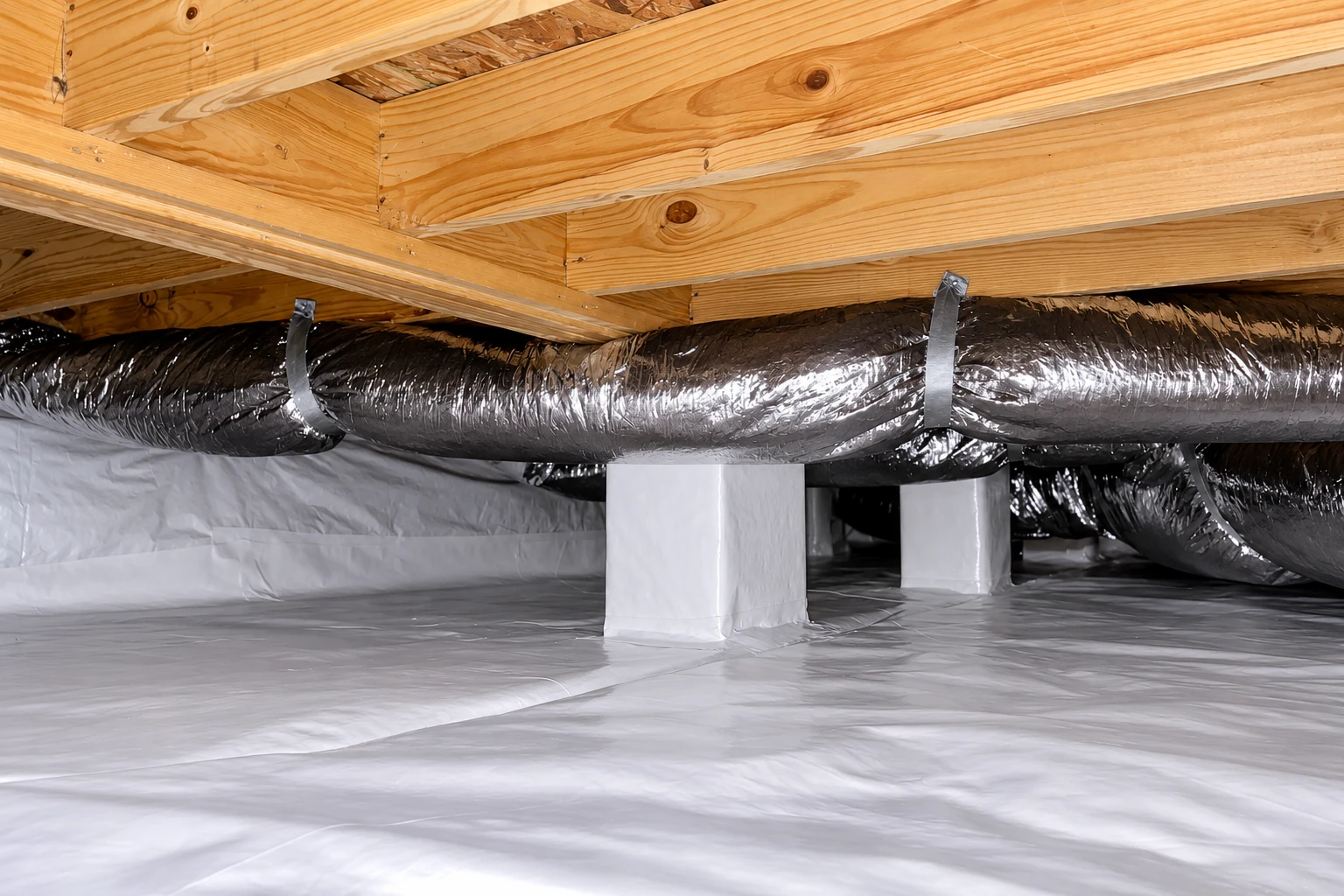
Crawl space insulation in Mount Pleasant means air sealing and insulating either the crawl space walls or the floor above them, so less heat escapes through the floor and the rooms over it stop feeling cold underfoot. Done properly, it also comes with a clear plan for keeping the space under your house dry.
Most people who call us about the crawl space have noticed cold floors, a musty smell or old insulation hanging loose under the house, and they aren't sure what's safe to do about it. The price mostly turns on how large and how low the space is, whether old insulation has to come out first, whether we treat the walls or the floor, and what it will take to keep the space dry, which is why a crawl space vapor barrier often comes up in the same conversation. The schedule depends on those same things, plus any equipment, flood zone or permit questions that need an answer before work starts. When I come out, I'll explain what I found and what I'd suggest, so you can see which of these apply to your house.
How do you know your crawl space needs insulation?
Floors that feel cold
If the floor feels cold through your socks while the thermostat says the room is fine, heat is usually leaving through the floor into the crawl space. Waiting mostly costs you comfort and a heating system that works harder than it should.
A musty smell indoors
A damp, earthy smell in the rooms over the crawl space usually means moist air from underneath is working its way up into the house. Left alone, that moisture keeps the framing damp, which is how mold and soft wood get started.
Insulation hanging or fallen
Batts sagging from the floor joists or lying on the ground have usually soaked up water at some point and stopped doing much good. The longer they hang there, the longer they hold moisture against the wood they were meant to protect.
How we handle crawl space insulation
I start by looking for water, because insulation over a damp crawl space only holds the damp against the wood. I check the ground, the vents, the framing and whatever insulation is already down there, and then we decide together whether to treat the crawl space walls or the floor above and how the space will stay dry once we're finished. If a furnace or water heater burns fuel down there, or the house sits in a flood zone, we sort that out before closing anything up. Then our crew pulls out any wet or fallen insulation, does the air sealing by closing the gaps around pipes, wires and ducts, installs the new insulation, which on walls is often closed-cell foam, a dense foam that also blocks moisture, and cleans up after itself.
The floor is rarely the only place a house loses heat. If the rooms still run cold or drafty after the crawl space is done, wall insulation may be the next step, and our air sealing services close the gaps through the rest of the house, from the attic hatch down, so new insulation isn't fighting a draft.
Insulating the crawl space walls
Building science guidance calls sealing and insulating the crawl space walls a best practice in every climate, because it brings the crawl space inside with the rest of the house. It usually suits a house with ductwork or equipment under the floor, and it's what I lean toward when we can keep the space dry and settle the vents and equipment safely.
Insulating the floor above
Some houses use the floor as the line between inside and outside, with insulation fitted between the floor joists and the crawl space left vented below. It usually suits a house where closing off the crawl space isn't practical, and it means keeping a careful eye on moisture under the house.
A free look under your floor, with a plan for moisture
Send us a few lines about your house and we'll reply within one business day to set up a visit. I come out myself to look over the crawl space, explain what I found and give you a free estimate on site. There's no obligation to go ahead.
(843) 416-5007What the local rules mean for crawl space insulation in Mount Pleasant
The Town of Mount Pleasant requires a building permit for any construction project worth more than an amount its Building Official sets, or one that needs a structural inspection. Whether your crawl space job crosses that line depends on its scope, so it's something we confirm with the building office before any work starts. The flood rules matter even more under the floor. When a crawl space house is built new or substantially improved, any fully enclosed area below the design flood elevation, the flood height the city's rules are written around, has to let floodwater flow in and out on its own and can't be finished living space. That may limit how a crawl space can be closed off, so if your house is in a flood zone, I'll ask you to call the city's building inspection office at 884-5184 before we begin, and they'll tell you whether the substantial improvement rules affect your project.
Under older and lived-in houses here, we usually find vented crawl spaces, low clearance, ductwork running beneath the floor and batts that dropped years ago. We see much the same under older homes in Charleston and North Charleston, and we handle it the same way, by dealing with the water first and the insulation second.
What happens when you call about crawl space insulation in Mount Pleasant?
Call or send us a note
Call (843) 416-5007 or fill out the form, and we'll set up a time for me to come out. A few words about the house, its age and what you're noticing help me come prepared.
I look over the crawl space
I go under the house myself, ask a few questions, then explain what I found, whether I'd treat the walls or the floor, and what has to happen first. You'll see what's driving the cost before you decide anything.
We check with the building office
If you'd like to go ahead, we check with the building office for your address, whether that's Mount Pleasant, another city or the county. If a permit is needed, we take care of the application and keep you informed.
Install, then a walkthrough together
Our crew protects your home on the way in and out and does the installation. Before we call it done, I check the work with you and explain what we did and why.
Frequently asked questions
What causes a vented crawl space to get damp in a humid climate?
Research on vented crawl spaces in mixed and hot-humid climates found they tend to get wetter, not drier, because moisture condenses on the cooler floor framing. That moisture can feed mold and damage the wood, which is why we settle how the space will stay dry before any insulation goes in.
How much does crawl space insulation cost near Charleston, SC?
Insulating a crawl space in the Charleston area usually costs about $1,400 to $6,300 per job. Where your job lands depends on the size and height of the space, whether old insulation has to come out, the material and any moisture work, and I'll give you your own figure once I've seen it.
Can I just close my crawl space vents to keep the moisture out?
Not safely on its own. Sealing the vents alone can raise moisture under the house, and if a furnace or water heater that draws its air from the crawl space sits down there, it can create a deadly situation. Turning a vented crawl space into a sealed, dry one takes a full plan, which is why the equipment question comes first on our visits.
How do I find out if my house in Mount Pleasant is in a flood zone?
Ask the city, which answers both phone and written questions about flood zones and base flood elevations, the height floodwater is expected to reach, for properties in Mount Pleasant. If you know the answer before my visit, we can plan around the flood rules from the start.
Does spray foam in a crawl space need to be covered?
Usually, yes. Most codes require a thermal or ignition barrier, a protective layer that's typically gypsum board, over foam insulation, because some foams can release toxic or flammable gases when heated. Some foam products are designed and tested to reduce those risks, and the local building authority confirms which foam meets code.
Does crawl space insulation need any maintenance?
Most crawl space insulation needs no ongoing maintenance. Every crawl space still benefits from a routine look for water damage, pests and moisture buildup, especially after heavy rain. Our work is backed by our satisfaction guarantee.
Mt Pleasant, SC
Tell us what's under your floor
Call (843) 416-5007 or use the form with your address, your flood zone if you know it and any furnace or water heater down there, so I can come ready to answer your questions, whether you're in Mount Pleasant, Charleston, North Charleston, Summerville or nearby.