Basement insulation in Mount Pleasant SC - a drier basement with fewer musty odors
Cool, damp basement walls and a musty smell every summer? We insulate them with the right material so the room stays drier.
- Fully licensed and insured.
- Free quotes on site.
- We reply within 1 business day.
Will insulating my basement walls help with the damp and the smell?
Basement insulation in Mount Pleasant means adding a layer of insulation to the inside or outside of your basement walls, which usually keeps the room warmer, and so drier, through our humid summers.
If your basement feels clammy and smells stale by midsummer, the season is usually the cause, because the basement runs much cooler than the rest of the house and cooler air means higher humidity, which can lead to mold and odors. What moves the price is mostly how much wall there is, which material suits how damp it runs, whether old, wet insulation needs insulation removal first, and how the foam will be covered. The schedule turns on how wet the walls are when we arrive and whether the job has to go through permit review, and once I've seen the space I'll explain what I found and what I'd suggest.
How can you tell your basement needs insulation?
A musty smell downstairs
If the basement smells stale once the weather turns warm, the air down there is usually holding more moisture than it should. Left alone, that damp air keeps feeding the odor and gives mold a place to start on boxes, framing and drywall.
Walls that feel cool and clammy
Bare foundation walls that feel cold or wet to the touch in summer tend to pull moisture out of the air onto their surface. The longer that goes on, the more it stains paint, rusts what's stored against the wall and keeps the whole room damp.
Dark spots near the floor
Spots along the bottom of the walls or on stored boxes usually mean moisture has been sitting there for a while. Mold tends to spread the longer the room stays damp, and cleaning it without dealing with the cause only buys time.
How we approach basement insulation
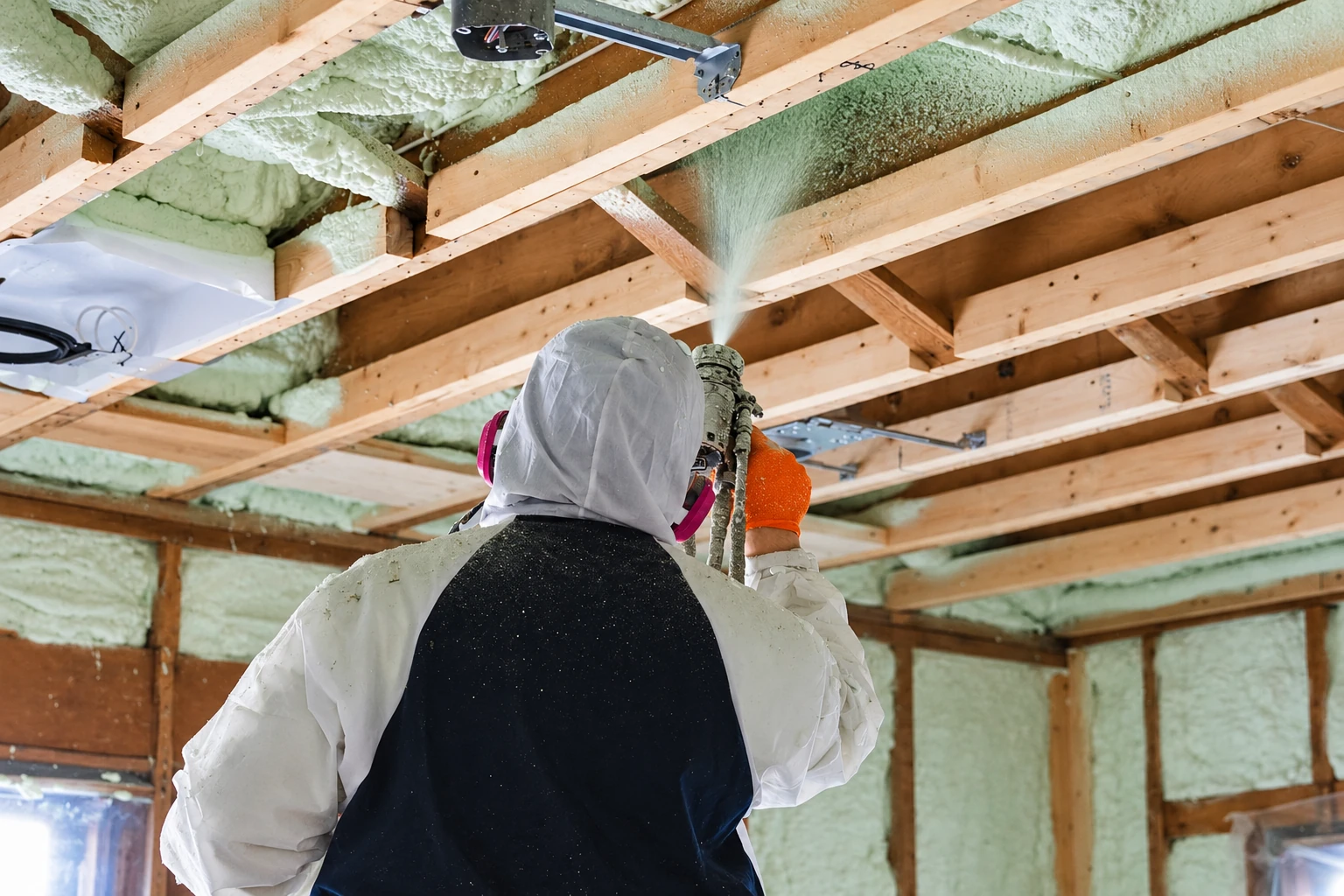
In a basement the goal is usually a drier room, so before I suggest anything I look at the walls for signs of water, check any old wiring and fuel-burning appliances nearby, and ask how you plan to use the space so the finish over the insulation won't trap moisture. Then our crew clears out any wet or failing insulation, seals the gaps where pipes and wires come through, and puts the new material tight to the wall, because damp air that slips in behind it brings the problem right back. Federal research guidance says spray foam has to be covered, either with ignition-barrier paint, a coating that protects it from fire, or with drywall, so I talk that covering through with you as part of the job rather than leaving it for later. Foam costs more than fiberglass, but it seals air while it insulates, and against a damp foundation I think that's worth paying for.
Most basement work comes down to two foams. Closed-cell foam insulation is the one I reach for when the walls run damp, while open-cell foam insulation is also an excellent air barrier but has to go on thicker before it slows moisture moving through the wall, so it suits drier walls better.
Closed-cell spray foam
This suits a basement where the walls feel damp or water has come in before, because the dense foam blocks moisture as well as heat. It costs more than the other choices, and it needs a covering once it's on.
Rigid foam boards
These suit fairly dry, flat walls and an owner who plans to frame and finish the room. Federal guidance says the boards only control moisture when they sit fully against the wall with no air gaps and every seam tightly sealed, so the fit matters more than the speed.
Find out which material suits your basement walls
Send the form and we'll reply within one business day to set up a visit at a time that suits you. I come out myself, look over your basement and give you a free estimate on site, with no obligation to go ahead.
(843) 416-5007What affects basement insulation in Mount Pleasant
The Town of Mount Pleasant requires a building permit for any construction project valued above an amount its Building Official sets, or one that needs a structural inspection, so whether your basement job needs a permit depends on its size and scope. Before work starts, we check with the building office for your address. If a permit is needed, we take care of the application, which is filed online with the Town of Mount Pleasant along with a site plan, and we keep you informed while it's under review.
Water is the other local factor, because Mount Pleasant sees flooding from blocked or undersized drainage and from storm surge, the rising water that comes with tropical storms and hurricanes. Fiberglass or cellulose set against basement walls can soak up a lot of moisture and stay damp most of the time, so after a wet spell we usually lean toward foam, and we weigh the same wet-ground questions on jobs in Charleston and James Island.
What happens when you call us about basement insulation in Mount Pleasant?
Call or send us a note
Reach us at (843) 416-5007 or through the form, and we'll set up a visit at a time that works for you. We answer weekdays from 7 AM to 10 PM and weekends from 8 AM to 9 PM.
I look over your basement
I come out myself, check the walls, any old insulation, nearby wiring and fuel-burning appliances, and ask how you plan to use the room. Then I explain what I found, which material and covering I'd suggest, and what each choice means for the price.
We check permits and dates
If you'd like to go ahead, we check with the building office for your address before anything is scheduled. When a job goes through Mount Pleasant's plan review, the current lead time is 4 to 6 weeks, so we build that into your start date.
We install and walk through
Our crew protects your floors and belongings, then does the work. Before we leave, I walk you through the finished basement and explain what we did and why.
Frequently asked questions
How much does it cost to insulate a basement in Mount Pleasant?
Across the US, basement insulation usually costs about $1,500 to $6,500 per project, and that's the general market range for a whole job, not our price. Choices like closed-cell foam and a drywall covering push a job toward the top of that range, while a smaller, drier space sits lower. I'll give you your own figure once I've seen the walls.
What is the best insulation to keep a basement dry?
Federal research found that closed-cell spray foam gives the best moisture control of any insulation used on the inside of a foundation. That makes it the usual choice when a dry basement is your main goal, especially since fiberglass or cellulose against the wall tends to stay damp, as I mentioned above.
Do I need a permit to insulate my basement in Mount Pleasant SC?
You may, because Mount Pleasant requires a building permit for construction projects valued above the Building Official's set amount or needing a structural inspection. We check with the building office for your address before work starts and handle the application if one is needed.
Does an insulation contractor need a license or bond in South Carolina?
South Carolina requires a current state license or registration for anyone doing residential building or specialty contracting. A residential specialty contractor also needs a surety bond when materials and labor for one homeowner's job come to more than five thousand dollars. It's fair to ask any contractor about both before you sign.
Is it better to insulate basement walls from the inside or the outside?
For an existing home the inside is usually the practical choice, and federal guidance says outside insulation shouldn't be used where termites are a problem. Outside insulation also needs careful protection from moisture while it goes in, which matters on low, wet ground.
What is the best way to finish basement walls after insulating them?
Use a finish that lets the wall dry, because plastic sheeting, vinyl or foil wallpaper, and epoxy, oil or alkyd paint all trap moisture in a basement wall. That's why I ask about your plans for the room early, so the finish over the insulation suits a damp foundation.
Mt Pleasant, SC
Have your damp basement looked over
Before you call, note the basement's rough size, any mold or musty smells, and what you'd like to use the room for, so the visit covers what matters to you.